HARBIN, April 11—The Annual Editorial Board Meeting 2026 of Journal of Public Management and the Academic Symposium on Research Methods for Public Administration in an Intelligent Society was held in Harbin on April 11. Experts and scholars in public administration from more than 20 universities, including Tsinghua University, Peking University, Renmin University of China and Zhejiang University, gathered for in-depth discussions on methodological innovation, knowledge production and the construction of an independent knowledge system for public administration in the context of an intelligent society. The meeting comprised four sessions: opening ceremony, academic report session, roundtable forum and editorial board working meeting.
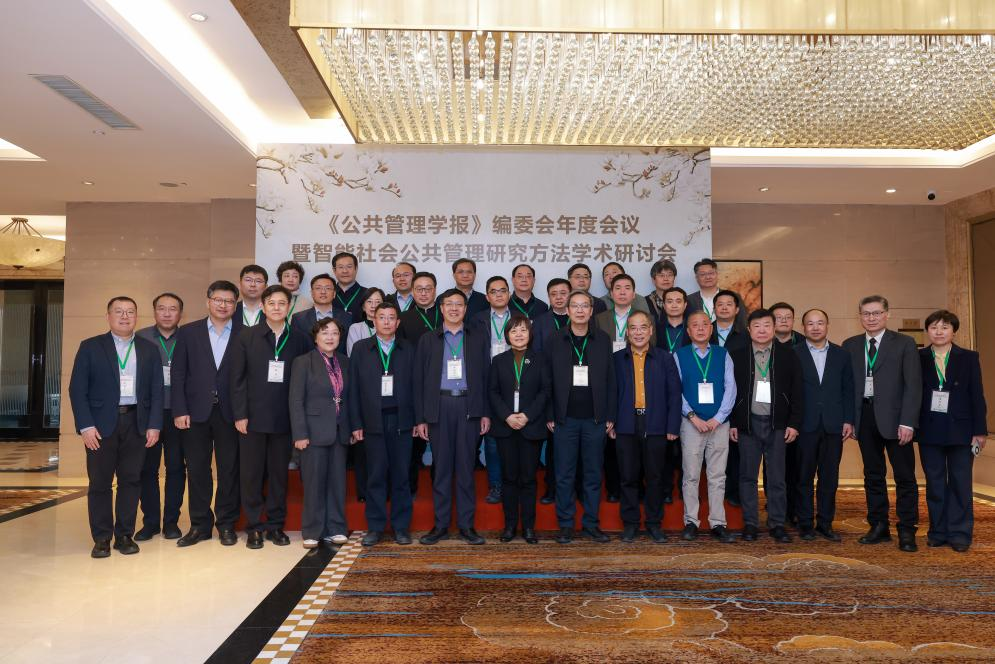
Group Photo of Exeperts
At the opening ceremony, Tan Yiqiu, Assistant President of Harbin Institute of Technology (HIT), delivered a speech. She extended a warm welcome to the experts and scholars present, thanked all sectors for their long-term support for the development of Journal of Public Management, and affirmed the achievements of the journal. She pointed out that the rapid development of artificial intelligence is profoundly reshaping the mode of economic and social operations, and bringing important new opportunities and challenges to the development of the public administration discipline. As important entities in knowledge innovation, universities should actively promote interdisciplinary integration and methodological innovation,deepen the integration of intelligent technologies and public governance research, and provide stronger academic support for the modernization of China’s governance system and governance capacity.
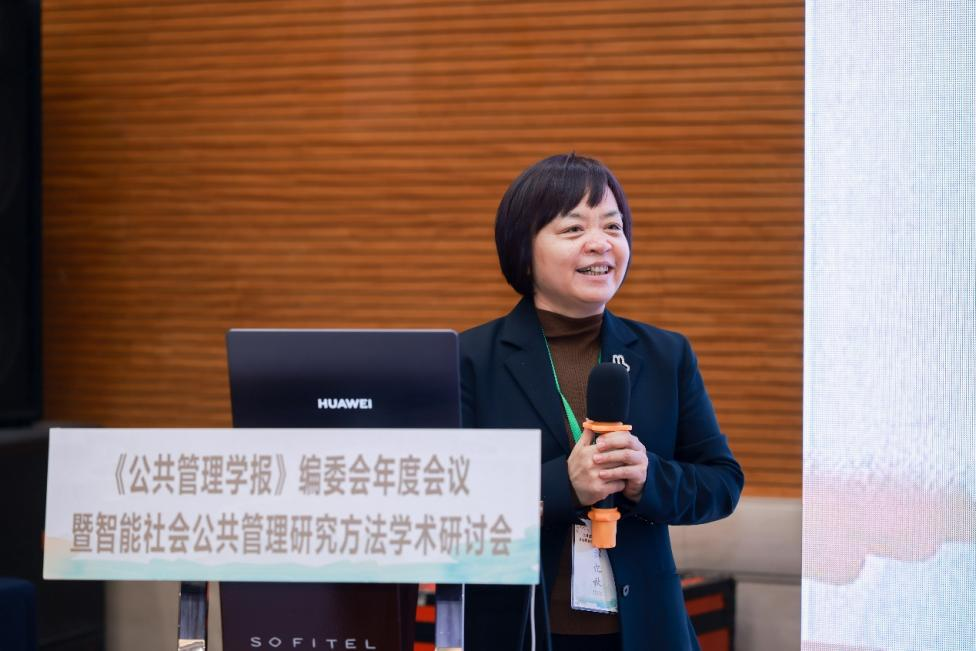
Tan Yiqiu Delivering a Speech
Ding Huang, co-convener of the Public Administration Discipline Appraisal Group under the Academic Degrees Committee of the State Council, Distinguished Dean of the School of Public Administration at the University of Electronic Science and Technology of China, and “Luojia Scholar”Distinguished Professor at Wuhan University, addressed the meeting. He noted that the new round of technological revolution represented by artificial intelligence is exerting a profound impact on the structure of social operation and governance models, and accelerating the evolution of public governance from digitalization to intelligentization. Against this background, the public administration discipline is urgently required to respond to the practical needs of an intelligent society, promote coordinated innovation in governance concepts, institutional systems and research methods, and gradually build an independent knowledge system of public administration with Chinese characteristics, so as to provide theoretical and methodological support for advancing Chinese modernization.
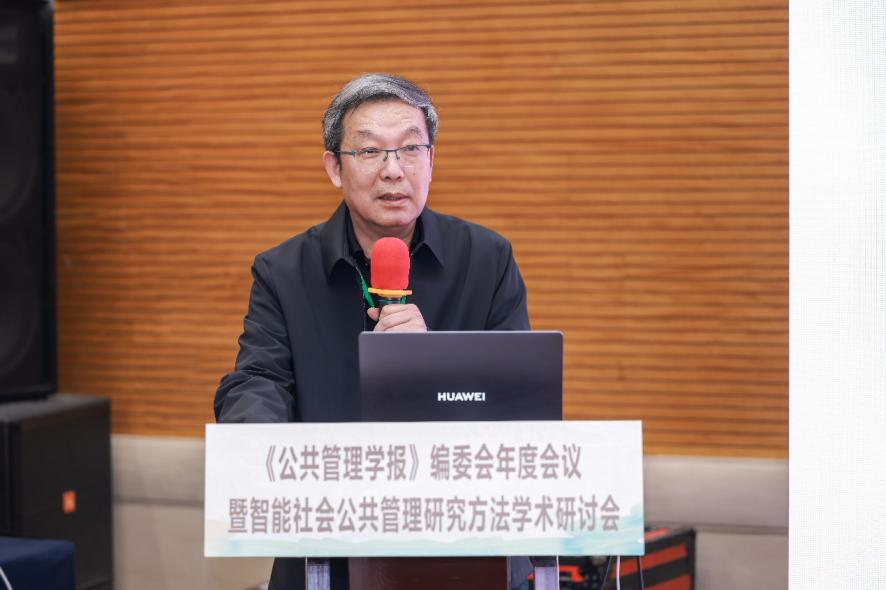
Ding Huang Delivering a Speech
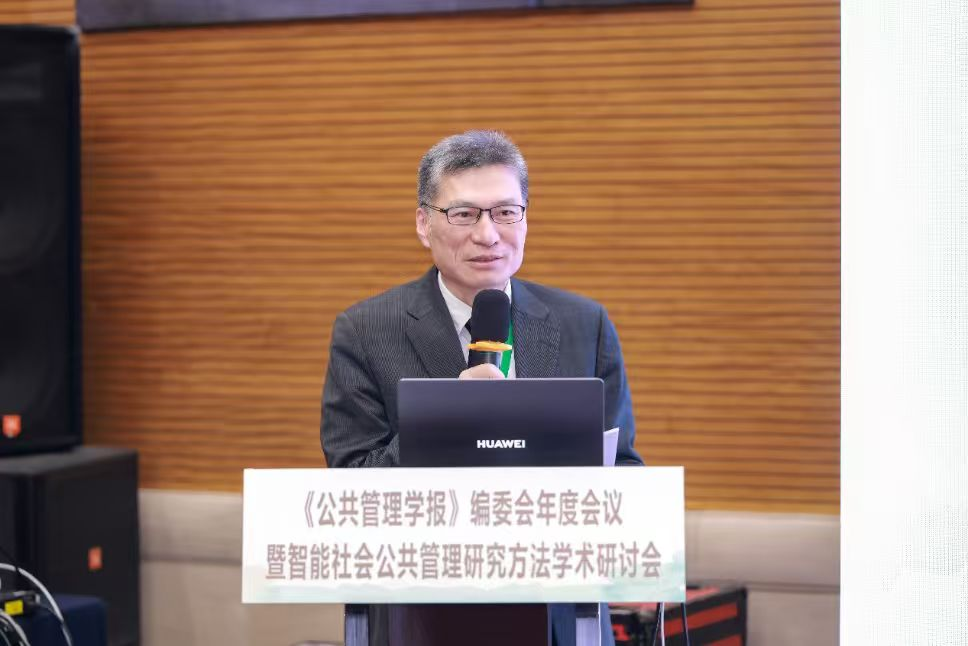
Sun Tao, Deputy Director of the Editorial Board of Journal of Public Management and Professor at Harbin Institute of Technology(Shenzhen), delivered a speech on behalf of the editorial board. He stated that academic journals are not only important platforms for the dissemination of academic achievements, but also key institutional carriers for promoting disciplinary development and knowledge innovation. Since its founding, Journal of Public Management has been committed to serving national strategic needs and the frontier of disciplinary development, and has kept focusing on key theoretical topics and methodological innovation in public administration research. Facing the development of an intelligent society, the journal will further give play to its academic leading role, boost the integrated development of theoretical and methodological innovation, and promote the formation of a more open, standardized and sustainable academic ecosystem.

Sun Tao Delivering a Speech
Wang Jian, Editor-in-Chief of Journal of Public Management and Dean of the School of Management HIT, presiding over the opening ceremony
The academic report session was chaired by Liu Luning, Executive Deputy Editor-in-Chief of the journal and Vice Dean of School of Management, HIT. Professors Ding Huang from Wuhan University, Zhu Zhengwei from Xi’an Jiaotong University, Zhu Xufeng and Meng Tianguang from Tsinghua University, Yu Wenxuan from Xiamen University, Liu Peng from Renmin University of China, Zhang Nan from Tsinghua University, and Sun Tao from Harbin Institute of Technology(Shenzhen) delivered academic reports respectively on the innovation and transformation of public administration research methods in the context of an intelligent society. These reports presented a distinct academic trend--public administration research is forming an intelligent governance research methodology system with Chinese characteristics and disciplinary frontiers through scenario orientation, technology empowerment and paradigm reconstruction, providing operable methodological tools for public administration research in the intelligent era.
The roundtable forum was chaired respectively by Yan Jinming, Secretary-General of the National MPA Education Steering Committee and Dean of the School of Public Administration at Renmin University of China, and Yu Jianxing, Secretary-General of the Steering Committee for Higher Education in Public Administration(Ministry of Education) and Professor at Zhejiang University. Experts attending the forum held in-depth discussions on core topics including the epistemological basis, methodological innovation paths and the construction of an independent knowledge system for public administration research in the artificial intelligence era. Combining their respective research fields and disciplinary development experience, the experts fully discussed such issues as the impact of generative artificial intelligence(GAI) on the paradigm of public administration research, the application boundaries of data-driven research methods, and the paths to build an independent disciplinary knowledge system. They agreed that the development of intelligent technologies is driving profound changes in the research objects, research methods and knowledge production mechanisms of public administration research, and it is necessary to promote the coordinated development of methodological and theoretical innovation under the premise of adhering to the public value orientation. With in-depth exchanges and diverse viewpoints at the forum, consensus has been further gathered in the academic circle on promoting the high-quality development of the public administration discipline, providing useful ideas for deepening theoretical exploration and methodological innovation of public administration research in the context of an intelligent society.
The editorial board working meeting was presided over by Professor Sun Tao. Huang Xinzhuo, Deputy Editor-in-Chief and Director of the Editorial Office of Journal of Public Management, delivered a comprehensive report on the journal’s work in 2025. The meeting received the report and discussed issues concerning the development of the journal and the selection of excellent papers of the journal in 2025. The meeting put forward opinions and suggestions for the journal to continuously improve its academic quality and influence.

On-site Scene of the Annual Meeting and the Academic Symposium
This meeting maintained the journal’s long-standing style of promoting high-level academic dialogue and serving disciplinary construction, and is also consistent with the general orientation of HIT in recent years to continuously strengthen interdisciplinary integration of economics, management and humanities and build a high-quality academic exchange platform. It marks a solid step taken by Journal of Public Management in leading the cutting-edge research direction of the public administration discipline, gathering academic consensus and promoting the ecological development of the discipline.